
Piercing Aftercare
Piercing aftercare is the daily routine that keeps a new piercing clean while your body heals it. For most piercings that means the same three things: rinse with sterile saline once or twice a day, pat dry, and otherwise leave it alone. You are not treating a wound so much as keeping it undisturbed while it closes on its own. Products support that process. They do not speed it up.
The Association of Professional Piercers recommends packaged sterile saline labeled as a wound wash, and no longer recommends mixing your own sea salt solution at home. Contact lens saline, eye drops and other saline products are not made for this and should not be used on a piercing.
NeilMed Piercing Aftercare is exactly that: pharmaceutical grade water and sodium chloride. Two ingredients, sterile, preservative free, in a spray can that works upside down.
How to Clean a New Piercing
- Wash your hands with soap and water before you touch the piercing or anything near it.
- Spray the piercing with sterile saline, front and back, until the area is saturated. Let it sit for a few seconds to loosen any dried discharge.
- Do not rotate, twist or slide the jewelry. Moving jewelry drags bacteria and debris through the healing channel and is one of the most common causes of irritation.
- Pat dry with clean gauze or a disposable paper product. Cloth towels hold bacteria and snag on jewelry.
- Repeat once or twice a day. More is not better. Over cleaning dries the tissue and slows healing.
Skip alcohol, hydrogen peroxide, Bactine, antibacterial soaps, ointments and tea tree oil. All of them are harsher than the tissue you are trying to heal.
How Long Does a Piercing Take to Heal?
Healing time depends on placement, blood flow, jewelry quality and your own body. A piercing that looks healed on the surface is usually still healing underneath, which is why changing jewelry early causes so much trouble.
Ear piercing ranges reflect published clinical guidance. The others reflect general consensus among professional piercers and vary more widely. All of them are estimates, not deadlines. Ask your piercer to check before you change jewelry.
What to Avoid While Your Piercing Heals
- Touching it. Hands are the number one source of contamination.
- Rotating the jewelry. There is no benefit and real downside.
- Changing jewelry early. Wait until your piercer confirms it is healed.
- Harsh cleansers. Alcohol, hydrogen peroxide, iodine, antibacterial soap.
- Ointments. They trap debris and block airflow.
- Submerging it. Pools, hot tubs, lakes and baths during initial healing.
- Sleeping on it. Pressure on cartilage piercings causes bumps and migration.
- Makeup, lotions and hair products near the site.
Most piercing problems trace back to over cleaning, touching and changing jewelry too soon, not to under cleaning.
Why Sterile Saline, and Why "Wound Wash" Matters
Saline solution is salt and water, nothing more. It is one of the most widely used solutions in medicine and appears on the World Health Organization's Model List of Essential Medicines.
What matters for a healing piercing is the specific kind of saline. Look for three things:
- Sterile. Non sterile solutions can introduce the exact bacteria you are trying to keep out.
- Isotonic. A 0.9 percent sodium chloride concentration matches your body's own fluid, so it rinses without stinging or drying the tissue. Stronger is not better. A too salty solution irritates.
- Preservative free. Saline made for other purposes often contains preservatives that are fine for a contact lens and wrong for an open piercing channel.
The ingredients label on NeilMed Piercing Aftercare Saline Solution reads pharmaceutical grade water and sodium chloride. That is the whole formula.
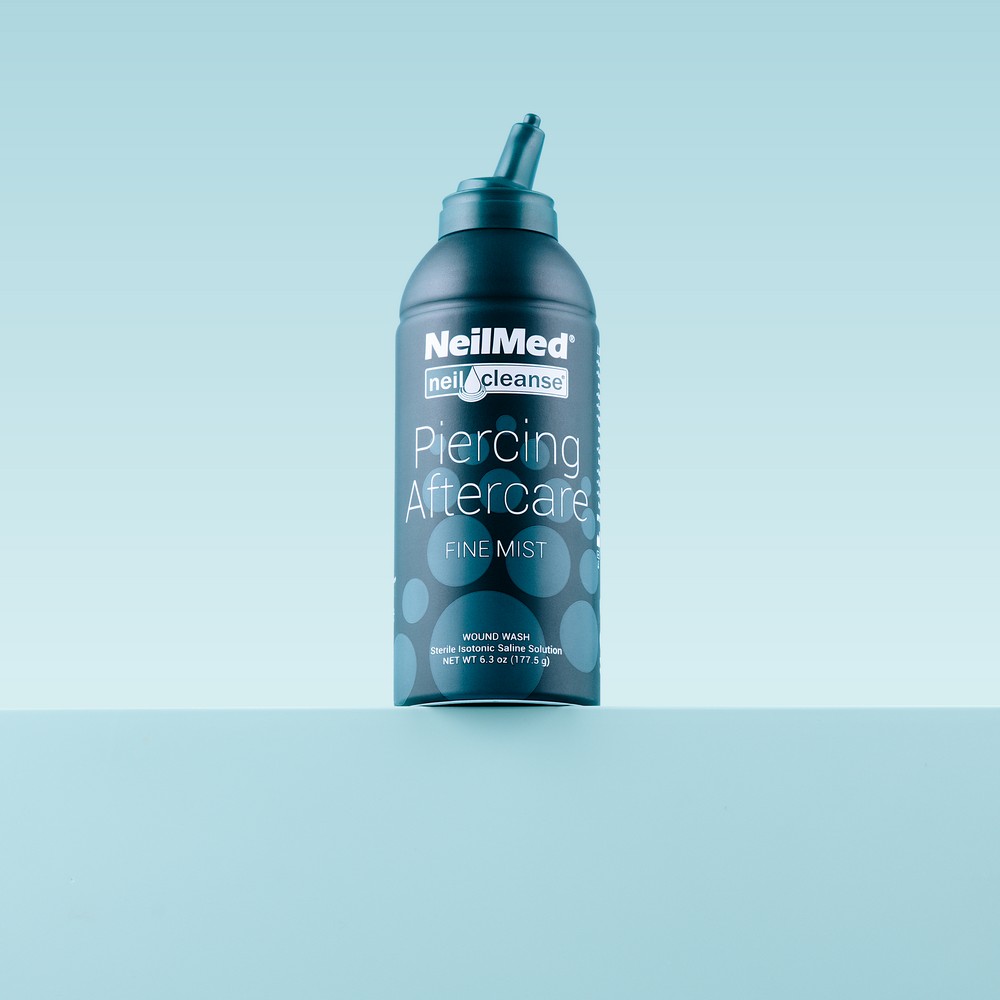
Piercing Aftercare Fine Mist Spray
The need for a fine mist spray in the piercing aftercare world spurred the creation of NeilMed Piercing Aftercare. The fine mist application allows users to spray the saline solution directly onto their piercing rather than soaking it in a saline bath or using a cotton ball to apply the saline solution. This creates a more sterile application process and offers a cleaning solution that makes it easy to clean surface piercings like cartilage piercings.
What the fine mist spray offers:
- Easy-to-use fine mist applications
- Bag-on-valve technology keeps the contents sterile and sprays even when the can is tipped upside down
- Ability to spray saline directly onto the piercing
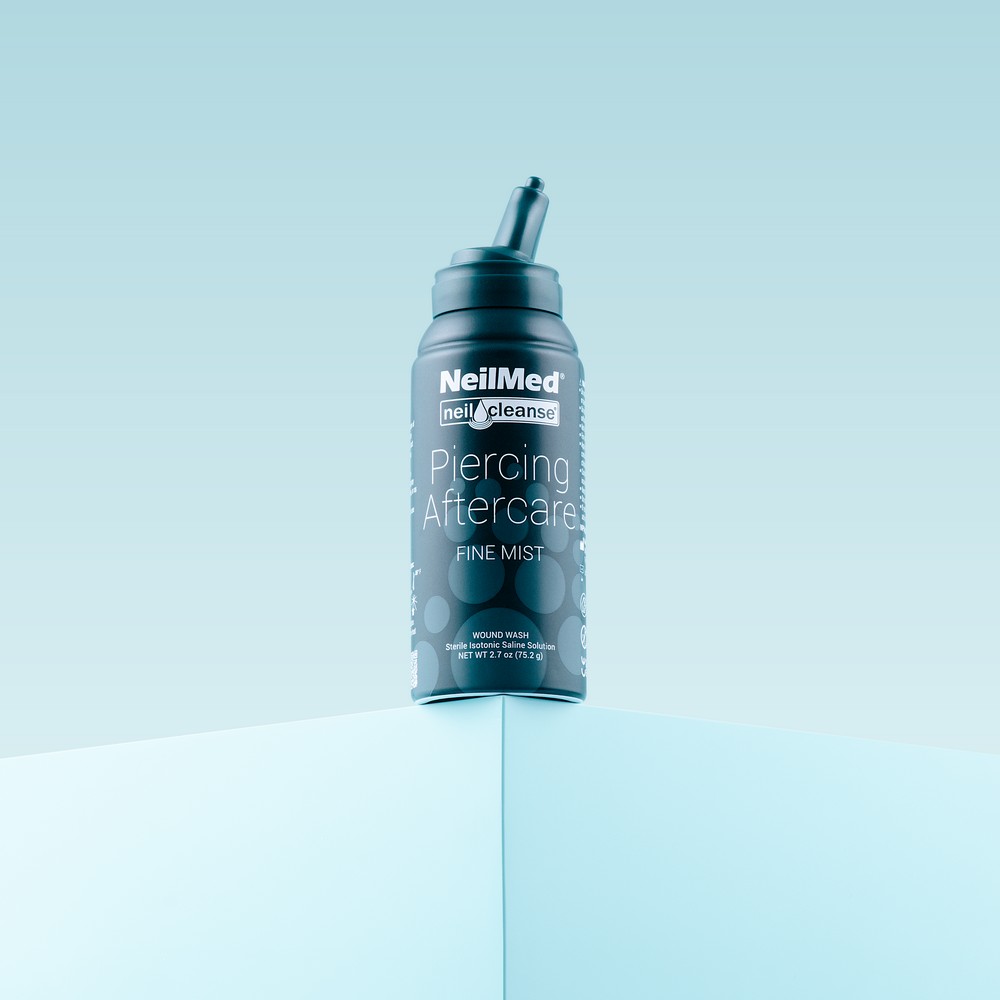
Travel Size
The 75mL bottle comes in the perfect size to fit in your bag so that you can conduct aftercare while on-the-go. It also adheres to TSA standards so that you can take it with you in your carry on.
What the travel size offers:
- Safe to carry on flights
- Conduct aftercare practices on-the-go
- Fits in a bag or purse so that you can discreetely take care of your aftercare needs while away from home
Irritation or Infection? How to Tell
Some swelling, tenderness and a clear or whitish crust are normal during early healing. That crust is dried lymph fluid, not pus, and rinsing it away with saline is most of what aftercare is. Mayo Clinic outlines when a piercing needs medical attention.
See a healthcare professional if:
- Swelling or skin color changes are not improving, or are getting worse
- The site oozes pus, which can be white, yellow or green, or has a foul odor
- Pain, throbbing or warmth increases rather than settles after the first several days
- You develop a fever
Note that infection does not always look red. On brown and Black skin, color changes and any streaking may appear purplish, gray, or simply darker than your usual skin tone. Judge by change from your own baseline rather than by looking for redness.
Cartilage piercings need a lower threshold. Upper ear cartilage has less blood supply than an earlobe, which makes infections there both more likely and more serious. If a cartilage piercing becomes painful, swollen and noticeably discolored, get it looked at promptly rather than waiting it out.
If you think a piercing is infected, talk to a healthcare professional before removing the jewelry. Removing it can allow the channel to close over an active infection, but that call depends on the situation and belongs to whoever is treating you. Your piercer can often refer you to a piercing friendly medical provider.
This page is general information about piercing aftercare and is not medical advice.
Piercing Aftercare FAQ
How often should I clean a new piercing?
Once or twice a day with sterile saline is enough for most piercings. Cleaning more often dries out the tissue and can slow healing rather than help it.
Can I use contact lens saline or eye drops on a piercing?
No. The Association of Professional Piercers specifically advises against it. Those products often contain preservatives and buffers meant for the eye, not for an open healing channel.
Should I mix my own sea salt solution?
The APP no longer recommends homemade sea salt solutions. Concentration is hard to get right, and a solution that is too strong irritates and dries the piercing. Packaged sterile saline removes the guesswork.
Do I need to rotate my jewelry while it heals?
No. Rotating jewelry is outdated advice. It drags bacteria and dried discharge through the healing tissue and is a common cause of irritation bumps.
What is the crust around my new piercing?
Dried lymph fluid. It is a normal part of healing. Soften it with saline and rinse it away rather than picking at it.
Is NeilMed Piercing Aftercare safe for oral piercings?
Sterile saline is a gentle rinse, but oral piercings have their own routine that includes rinsing after meals and at bedtime. Follow the aftercare instructions your piercer gives you for oral placements.
Can I take piercing aftercare spray on a plane?
Yes. The 75mL travel size fits within TSA liquid limits for carry on bags.
How do I know when my piercing is fully healed?
A healed piercing does not hurt, is not swollen or discolored, has no crusting or flaking, and the jewelry moves freely. Since piercings heal from the outside in, the most reliable confirmation is having your piercer inspect it before you change jewelry.
Does aftercare make a piercing heal faster?
No. Your body does the healing. Good aftercare keeps the site clean and undisturbed so healing is not interrupted. Consistency and leaving it alone matter more than any product.